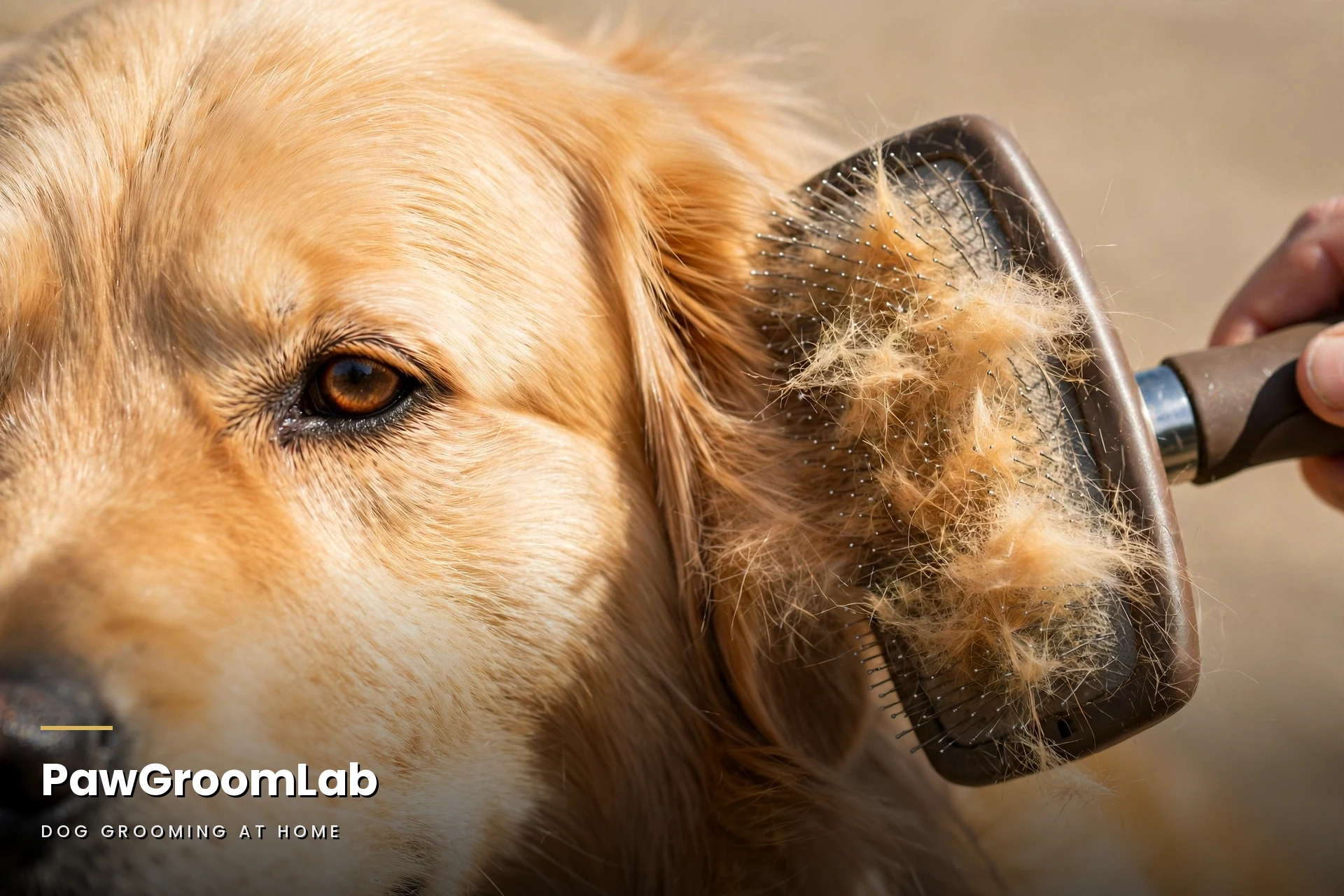
How to Brush Out Shedding (Deshedding Guide That Actually Helps)
TL;DR — How to brush out shedding, in short: brush a dry coat, with the grain, in sections — and match the tool to the coat. Short coats need a rubber curry brush; double coats need an undercoat rake followed by a slicker; curly coats need a pin brush and a wide comb. Heavy shedders need short sessions 3 to 4 times a week, daily during peak shedding season. Brushing will not stop shedding — no healthy dog stops shedding — but it moves the fur from your sofa into the brush, and that is the whole point.
Table of Contents
Why Your Dog Sheds (and Why Brushing Helps)
Shedding is normal. Dogs renew their coats seasonally — most heavily in spring and autumn — and indoor dogs, who live in steady temperatures and artificial light, often shed lightly all year round. The loose fur you find on the sofa is dead undercoat working its way out. Brushing does two things at once: it removes that dead fur before it lands on your furniture, and it spreads the skin’s natural oils through the coat, which keeps the remaining hair healthier and less prone to breaking into the fine floating particles that settle everywhere. A well-brushed shedding dog sheds the same amount biologically — and leaves a fraction of it around your house.
Before You Start: The Right Tool for the Coat
Using the wrong brush is the most common reason brushing “doesn’t work.” Match the tool to the coat:
- Short, smooth coats (Beagle, Boxer types): a rubber curry brush or grooming mitt to loosen fur, finished with a soft bristle brush.
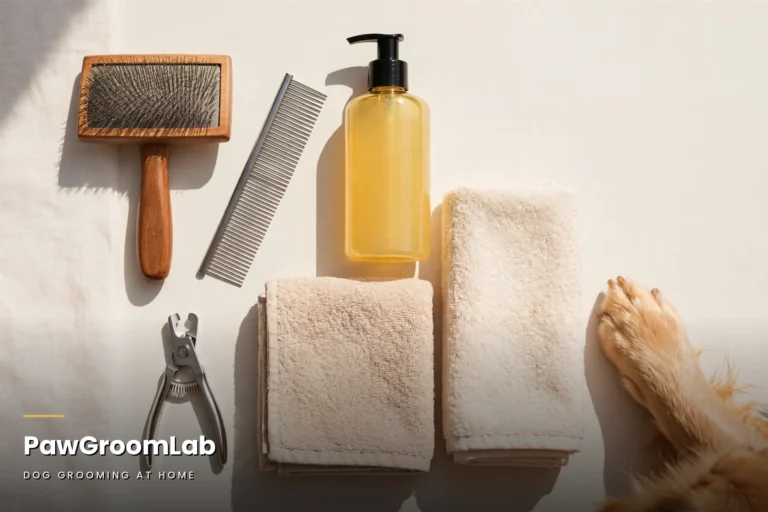
- Medium coats: a slicker brush for tangles and loose topcoat, plus a steel comb to check your work.
- Double coats (Husky, Shepherd, Retriever types): an undercoat rake first — it reaches the loose undercoat other brushes miss — then a slicker for the topcoat.
- Long, silky coats: a pin brush to avoid breakage, plus a wide-toothed comb for dematting.
- Curly coats: a pin brush and a wide comb, every other day, because curly fur mats fast.
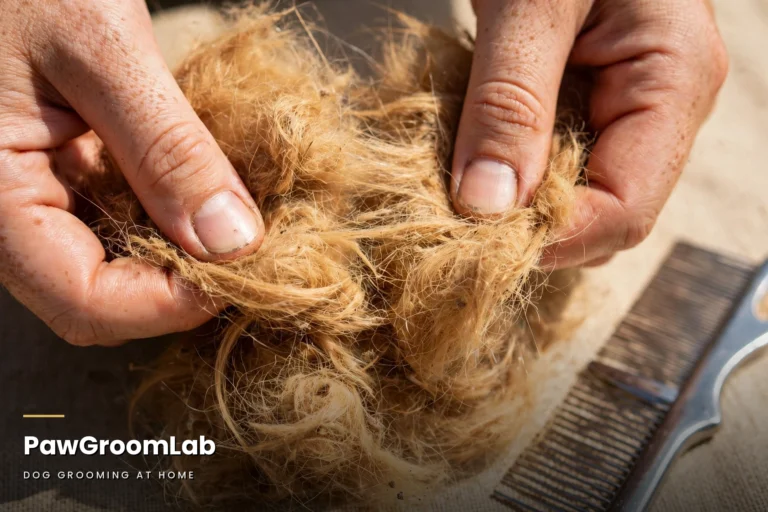
A deshedding blade can help occasionally during peak season, but it should not replace the rake for regular use — used too often or pressed too hard, it thins the coat and irritates the skin. Whatever the coat, you also need: treats, a non-slip surface, and a bin or bag for the fur, because a good session produces a surprising amount of it.
Step 1: Start With a Dry, Tangle-Free Coat
Brush a dry coat. Bathing first can loosen dead hair, but if you do bathe, dry the coat fully before using a rake or blade — brushing wet fur pulls and tangles. Before any deshedding, work through tangles and mats with a comb and, if needed, a little detangling spray. Never drag a rake through a mat: mats should be worked out gently with fingers and a comb first, because pulling hard hurts and teaches the dog to hate brushing. If a mat will not come out, that is a matted-fur job on its own, not something to force during a shedding session.
Step 2: Work in Sections, With the Grain
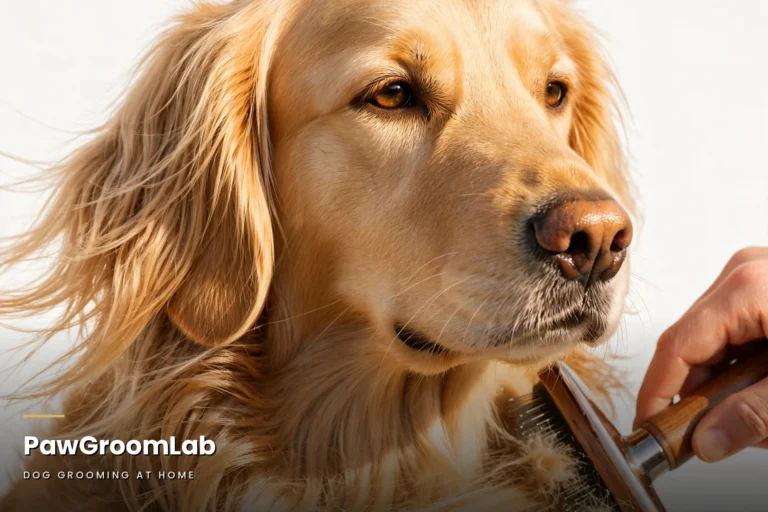
Always brush in the direction the fur grows, never against it. Work in sections so you actually finish the dog instead of brushing the same easy spots twice: start at the neck and shoulders, move down the back and sides, then the chest, belly, legs, and tail last. Pay attention to the mat-prone and fur-heavy areas — behind the ears, under the legs, the feathering on the legs, and around the tail. Use light, steady pressure and let the tool do the work; pressing hard does not remove more fur, it just irritates skin. Check the brush often and clear it — a clogged brush stops picking up fur, and owners mistake that for “no more shedding” when the coat is still full of it.
Step 3: The Double-Coat Routine (Where Most Fur Hides)
For double coats, the order matters: undercoat rake first, in sections, with the grain, until the rake starts coming out mostly clean. Then a slicker over the topcoat to catch what is left and smooth the coat. If you have a high-velocity dryer and your dog tolerates it, a blow-out after a bath removes an impressive amount of loose undercoat — do it outdoors or in a contained space, because the fur goes everywhere. Never shave a double coat to reduce shedding: the undercoat is insulation, not excess, and shaving it damages temperature regulation and can change how the coat grows back.
Step 4: Set a Rhythm You Can Actually Keep
Frequency beats intensity. Short, regular sessions remove more fur overall than one long weekly battle, and dogs tolerate them far better. As a guide:
- Short coats 1 to 2 times a week
- Medium coats 2 to 3 times
- Heavy double coats 3 to 4 times a week, daily during peak shedding season
- Curly coats every other day
Ten minutes three times a week beats thirty minutes once a week — same total fur removed, far less effort per session, and far less fur on the floor in between. Pair brushing with something pleasant: treats throughout, a calm voice, and stop while the dog is still relaxed. Ending on a good note is what makes the next session easy.
Mistakes That Make Shedding Worse
- Brushing against the grain, which breaks hair and irritates skin.
- Pressing a deshedding blade hard or using it daily, which thins the coat.
- Skipping the comb check — if a steel comb still snags, there is still loose fur and tangles left.
- Brushing a wet coat with a rake.
- Bathing constantly to “wash the shedding away” — overbathing dries the skin and can increase shedding.
- And expecting brushing to stop shedding entirely: it will not, and chasing that goal with harsher tools only damages the coat you are trying to manage.
Troubleshooting
I brush and brush and the fur never stops: that is normal during peak season — the undercoat is deep, and a rake session removes only what is loose that day. Keep the rhythm; it tapers as the season passes. If shedding suddenly increases a lot, or becomes patchy, that is not seasonal — see the vet box below.
My dog hates being brushed: shorten sessions to a few minutes, use high-value treats, and start with the easiest areas. Check for hidden mats or sore spots first — a dog that suddenly hates brushing may be telling you something hurts.
The coat looks thin after deshedding: you may be overusing a blade or pressing too hard. Go back to the rake and slicker, lighten your pressure, and give the coat a few weeks to recover.
Brushing pulls out clumps with skin flakes: some dandruff after a heavy shed is common, but persistent flaking, redness, or a smell means the skin needs a vet’s look, not more brushing.
Vet Safety Box
Brushing is grooming, not diagnosis. See a vet if:
- Shedding suddenly increases a lot or becomes patchy or bald in places
- You find redness, scabs, sores, swelling, or a bad smell on the skin while brushing
- The dog is intensely itchy, biting at its coat, or in pain when brushed
- The coat changes texture or colour suddenly
Diet, stress, allergies, and parasites can all change shedding, and those need a vet’s assessment before any grooming fix.
Frequently Asked Questions
How often should I brush a shedding dog?
Short coats 1 to 2 times a week, medium coats 2 to 3 times, heavy double coats 3 to 4 times a week and daily during peak season, curly coats every other day. Short, frequent sessions beat one long one.
Does brushing stop shedding?
No — no healthy dog stops shedding. Brushing moves dead fur from your furniture into the brush and keeps the remaining coat healthier, which is a big difference in the house even though the biology is unchanged.
Should I brush wet or dry fur?
Dry, for rakes and blades. A bath can loosen dead hair first, but dry the coat fully before raking — wet fur pulls and tangles.
What is the best brush for a double-coated dog?
An undercoat rake first, then a slicker for the topcoat. A deshedding blade can help occasionally in peak season but should not replace the rake.
Can I shave my dog to reduce shedding?
No, especially not a double coat. Shaving damages insulation and can change regrowth. Manage shedding with brushing, not clipping.
My dog sheds all year — is that normal?
For indoor dogs, yes — steady temperatures and light blunt the seasonal cycle, so light year-round shedding is common. A sudden increase or patchy loss is not normal and deserves a vet visit.
What to Do Next
Brushing pairs with bath day: a bath loosens dead coat, a full dry, then a brush-out removes what the bath freed. Start with our bath guide: How to Bathe a Dog Without Stress — and keep nails in the same session with our nails guide: How to Trim Dog Nails Safely.
Guides that pair naturally with this one (plain text names only, no links yet): Complete Dog Grooming at Home Guide; How to Remove Matted Fur Without Hurting Your Dog; Dog Grooming Tools Beginners Actually Need; Complete At-Home Dog Grooming Schedule.


5 Comments