Puppy’s First Groom: Step by Step (Make It Positive)
TL;DR
Puppy first groom, in short: start at home, start small, and stop while it is still fun. From about 8 weeks, in short daily sessions of 30 to 60 seconds, teach your puppy that hands, brushes, water and sounds are safe: touch paws, ears, tail and face with treats, let them sniff the brush for a couple of minutes a few times a day, and only move to real brushing, a first bath and nail practice once they stay relaxed. Keep every session short, play first so they are a little tired, use the same calm spot every time, and always stop before they get restless — a session that ends happy builds the next one. First home bath around 8 to 10 weeks once they have settled in, salon intro usually 12 to 16 weeks after vaccinations, and no full haircut until the adult coat starts coming in around 6 to 8 months.
Table of Contents
When Can a Puppy Be Groomed?
Two different clocks matter, and mixing them up causes most first-groom mistakes. At home, you can start handling and desensitization as soon as your puppy settles in, usually around 8 weeks: touching, brushing practice, water sounds, dryer sounds from a distance. A first gentle home bath fits around 8 to 10 weeks, once the puppy is settled, using lukewarm water and a puppy-specific shampoo, kept very short. The salon is different: most groomers and vets point to a first intro groom around 12 to 16 weeks, after the second round of core vaccinations, because a salon is full of other dogs and shared equipment. Some sources say wait until about 16 weeks, when the full puppy series is done. The safe rule: home intro from 8 weeks, salon intro only after your vet confirms vaccinations are far enough along — ask at a puppy check-up rather than guessing. And a full body haircut is a much later milestone, around 6 to 8 months, when the adult coat starts replacing puppy fluff; cutting a young puppy’s body coat early can chill them and is not needed.
Before the First Groom: What You Need
Keep the kit small — a puppy does not need the full adult setup yet. You need: a soft brush suited to their coat (a soft slicker or bristle brush for most puppies), a steel comb for checking your work, a puppy-specific shampoo, towels, a non-slip mat for the tub or table, small high-value treats, and styptic powder on hand for nail practice. A dryer can wait until the sound-introduction stage; a regular towel and patience cover the first baths. What you do not need yet: clippers for a body cut (no full haircut for months), adult-strength tools, or any human shampoo or product. Set up one quiet, calm spot you will use every time — the same mat in the bathroom, for example — because puppies learn routines faster than they learn individual skills.
Week by Week: Build It Slowly
Week 1 is touch only. Several times a day, in sessions of 30 to 60 seconds, touch paws, ears, tail, belly and face, and reward calm acceptance with a treat. Lift a paw, hold it a second, treat. Lift an ear flap, look, treat. The goal is not grooming yet — it is a puppy that thinks “hands on my paws means good things.” If they mouth, freeze or pull away, you went too long or too fast: end on a calm note and try a shorter session next time.
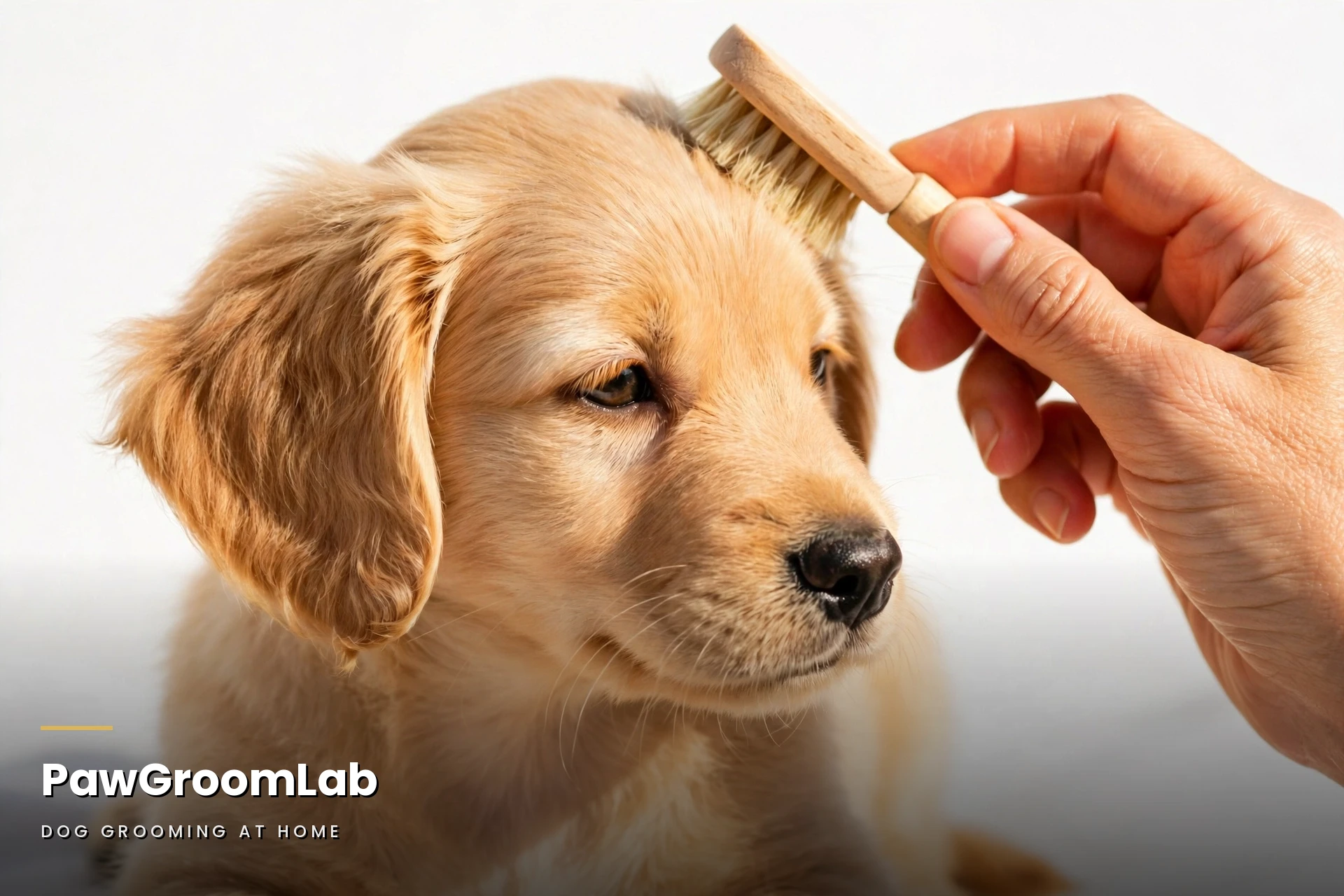
Week 2 adds tools as objects, not as work. Let the puppy sniff the brush and comb, then touch the brush gently to their fur for about two minutes at a time, a few times a day. After roughly five days of this, most puppies accept the brush itself, and you can start real brushing: back and sides first, then gradually belly, head and legs, which are more sensitive. If you hit a knot, do not yank — put your hand on the skin under it so the pull does not reach the skin, and comb through with firm, quick strokes.
Week 3 adds sounds and water. Run the dryer from across the room while treating, then closer over sessions — the goal is familiarity, not tolerance, and you always stop before stress. Let them hear running water, stand on the wet non-slip mat, and get a damp-cloth wipe before any real bath. By now the puppy should also accept a few seconds of standing still on a stable surface; build that to about a minute, rewarding stillness in tiny increments.
Week 4 is the first real groom day — and it is still short. Brush first, then a quick bath if they are ready, towel dry, a nail touch (or a couple of nails, not all of them), an ear look, and a treat finish. That is a complete first groom. It is not a salon session, and it should not take an hour.
The First Groom Day, Step by Step
Play first, for a few minutes. A tired puppy is a calmer puppy, and play also makes grooming the thing that follows fun. Then, in your usual calm spot: brush through the coat gently, back and sides first, checking with the steel comb for tangles. If a bath is due, use lukewarm water, a few inches in the tub or sink, wet the coat without spraying the face, lather puppy shampoo over back, legs, armpits, belly and groin, and rinse until the water runs clear. Towel dry by patting, not rubbing — rubbing tangles long coats and can start mats. Then nails: a few nails at a time is fine, and on a first groom, touching the clipper to the nail and treating may be the whole win. Finish with an ear look: lift the flap, check for redness or smell, and wipe only the outer ear if needed. Treat, play, done. If anything goes badly — the puppy panics at water, for example — stop that part and try again another day. A bad first experience lasts longer than a skipped bath.
How Often After the First Groom?
Puppy coats change fast, so the routine builds with them. Brush long or tangle-prone coats daily to prevent knots and mats; short coats can go about once a week. Baths only every 4 to 6 weeks unless they get into something messy — over-bathing dries out puppy skin and coat. Nails need checking every couple of weeks; a few nails per session is a legitimate routine, not a failure. Ears get a weekly look, cleaned only when needed. As the adult coat comes in around 6 to 8 months, daily line brushing with a slicker and comb matters more, because dead puppy fluff mats against the denser adult coat if it is not removed.
Mistakes That Spoil a First Groom
Going too long: the number one mistake. A session that ends in struggling teaches the puppy that grooming ends badly. Forcing a scared puppy through water, dryer or nails instead of stopping and retrying tomorrow. Starting with the hard parts — belly, head, legs, face — instead of back and sides. Yanking knots instead of holding the skin and combing through. Bathing too often, or with human shampoo. Booking a full haircut at 10 weeks, before vaccinations and before the coat is ready. And skipping the boring daily touch work and expecting the first groom day to go smoothly on its own.
Troubleshooting
My puppy will not stand still: that is normal, not defiance. Shorten sessions, reward stillness in seconds, and build up — standing for a minute is a trained skill, not a starting point. Play first helps a lot.
My puppy hates the dryer: go back to sound-from-a-distance with treats, and towel dry in the meantime. Never aim a hot dryer at a scared puppy to “get it over with.”
My puppy bites the brush: they are probably overstimulated or the session ran long. End calmly, and next time do two minutes of sniff-and-touch only.
I found a mat: do not pull it out. Work it with fingers and a comb, holding the base so the skin does not pull, and read our matted fur guide before it tightens.
My puppy’s skin looks red after a bath: stop using that product, rinse gently, and see a vet if redness, itching or smell persists — skin problems are vet territory, not a reason to try another shampoo.
Vet Safety Box — Read This Before the First Groom
Grooming a puppy is training, not treatment. See a vet — do not groom through it — if you find redness, swelling, sores, a bad smell, discharge, constant scratching, bald patches, or pain when touched. Confirm vaccination timing with your vet before any salon visit; salons reasonably require core vaccinations, and a puppy without them should stay in home grooming only. Never use human shampoo, human toothpaste, or any medicated product on a puppy without veterinary advice, and never try to treat an ear or skin problem with a home groom. If your puppy’s coat mats constantly despite regular brushing, or their skin stays irritated, ask your vet why — recurring coat or skin trouble often has an underlying cause grooming alone cannot fix.
Frequently Asked Questions
How old should a puppy be for its first groom?
Home handling can start around 8 weeks, a first gentle home bath around 8 to 10 weeks once settled, and a salon intro groom usually 12 to 16 weeks after vaccinations — confirm timing with your vet.
Can I bathe an 8-week-old puppy?
Yes, at home, once settled: lukewarm water, puppy shampoo, very short, towel dry well, and only every 4 to 6 weeks after that unless they get messy.
How long should a first groom session last?
Minutes, not an hour — start with 30 to 60 seconds of handling, build to a few minutes, and always stop before the puppy gets restless.
What does a puppy’s first groom include?
Touch work, gentle brushing, a short bath if ready, towel dry, a nail touch or a few nails, and an ear look — never a full body haircut.
When can a puppy get its first haircut?
Around 6 to 8 months, when the adult coat starts coming in; before that, only tiny hygiene trims around eyes, paws and sanitary areas if needed.
My puppy hates grooming — have I ruined it?
No. Go back to shorter sessions, higher-value treats, and touch-only work for a week. Puppies recover fast when the pressure comes off.
What to Do Next
Once the first groom goes well, the routine grows with the puppy.
How to Bathe a Dog Without Stress
How to Remove Matted Fur Without Hurting Your Dog
How to Dry a Dog After a Bath; Dog Grooming Tools Beginners Actually Need; Complete At-Home Dog Grooming Schedule; Complete Dog Grooming at Home Guide.
3 Comments