Long-Haired vs Short-Haired Dog Grooming Routine
TL;DR
Long haired vs short haired dog grooming, in short: the coat decides the routine, not the owner. Short coats are low maintenance but not no maintenance: brush once a week, bath every 4 to 6 weeks, nails every 3 to 4 weeks, and you are mostly done. Long coats need daily brushing to stop mats, a bath every 3 to 6 weeks, and a professional trim every 4 to 6 weeks if the coat keeps growing. Double coats get an undercoat rake 2 to 3 times a week (daily in shedding season) and must never be shaved. The biggest mistake on both sides is assuming one routine fits all dogs — check the side-by-side table below, find your coat, and follow that column.
Table of Contents
Side by Side: The Routine at a Glance
Short coat (Beagle, Boxer, Dalmatian, Greyhound type): brushing once a week with a bristle brush or rubber curry; bath every 4 to 6 weeks, or up to every 2 to 3 months if the dog stays clean; nails every 3 to 4 weeks; ears checked weekly; professional grooming rarely needed unle/ss nails or ears need help. Long coat (Shih Tzu, Maltese, Yorkshire Terrier, Afghan Hound type): brushing daily with a slicker brush plus a steel comb check; bath every 3 to 6 weeks with conditioner to keep hair manageable; trimming around eyes, paws and sanitary areas regularly, professional groom every 4 to 6 weeks; drying takes much longer and must be thorough. Medium coat (Labrador, Corgi, Australian Shepherd type): brushing 2 to 3 times a week, bath every 4 to 6 weeks, watch tangles around ears and legs. Double coat (German Shepherd, Husky, Golden Retriever, Pomeranian type): undercoat rake 2 to 3 times a week, daily during spring and autumn shedding seasons, bath every 6 to 8 weeks, never shave. Curly or wavy coat (Poodle, Labradoodle, Bichon Frise type): brushing every other day to daily with a slicker, bath every 3 to 4 weeks, professional groom every 4 to 6 weeks — curly coats mat fastest when brushing slips.
The Short-Coat Routine
Short does not mean zero work — it means fast work. Once a week, brush with a bristle brush or rubber curry to remove loose hair and dirt and to spread skin oils for shine. That weekly session is also your skin check: look for redness, lumps, ticks or dry patches while you brush. Bath every 4 to 6 weeks with a mild dog shampoo, or less often if the dog stays clean — some short-coated dogs genuinely go 2 to 3 months between baths without smelling, and over-bathing dries their skin. Nails still need trimming every 3 to 4 weeks (short coat, same nails), and ears get a weekly look. The trap with short coats is shedding: they shed plenty, just in short hairs that stick to everything. Weekly brushing plus a rubber curry in shedding season keeps it manageable — brushing does not stop shedding, it moves it from your sofa to the brush.
The Long-Coat Routine
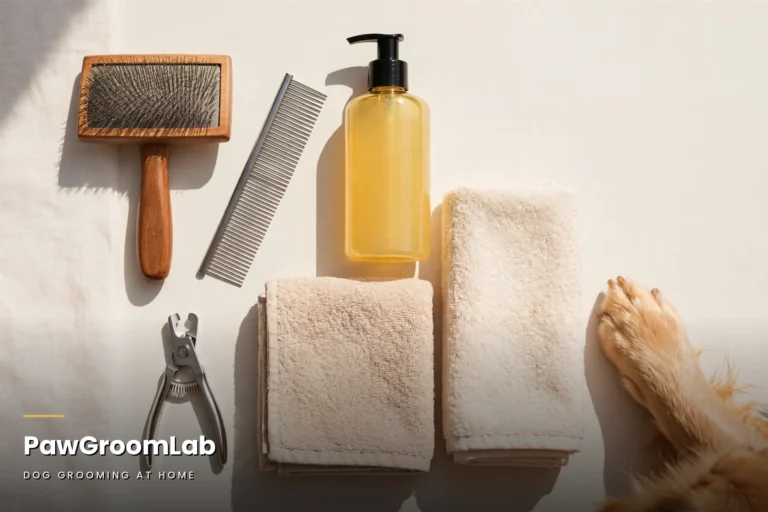
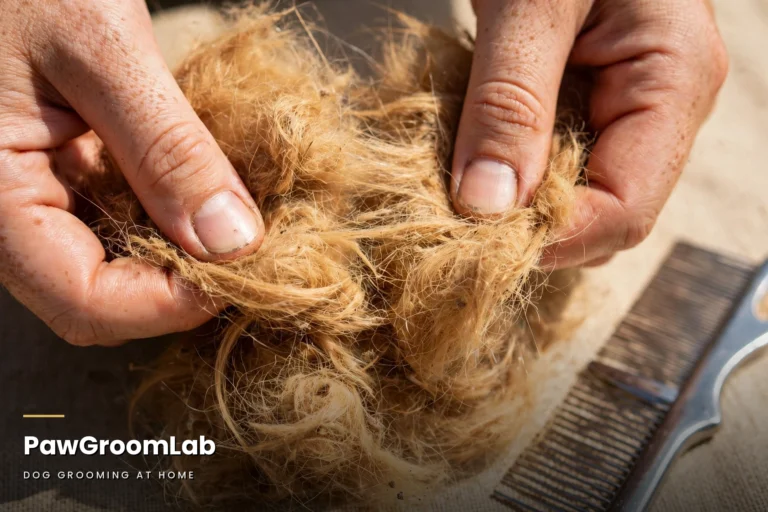
Long coats reward daily attention and punish skipped days. Brush every day with a slicker brush, working in sections, then run a steel comb through to find tangles the brush skipped — if the comb snags, there is a tangle to work, not yank. Pay special attention to mat-prone zones: behind the ears, armpits, behind the legs, and around the tail and collar line. Bath every 3 to 6 weeks with shampoo plus conditioner; conditioner is not optional luxury on long hair, it keeps the coat from tangling as it dries. Dry thoroughly — long coats take much longer to dry, and damp hair left under the topcoat mats and can irritate skin. Trim the hair around eyes, paws and sanitary areas between grooms so the dog can see, walk and stay clean, and book a professional groom every 4 to 6 weeks if the coat keeps growing. If you find a mat, work it with fingers and a comb holding the base, and never pull it out by force.
Double Coats and Curly Coats: The Special Rules
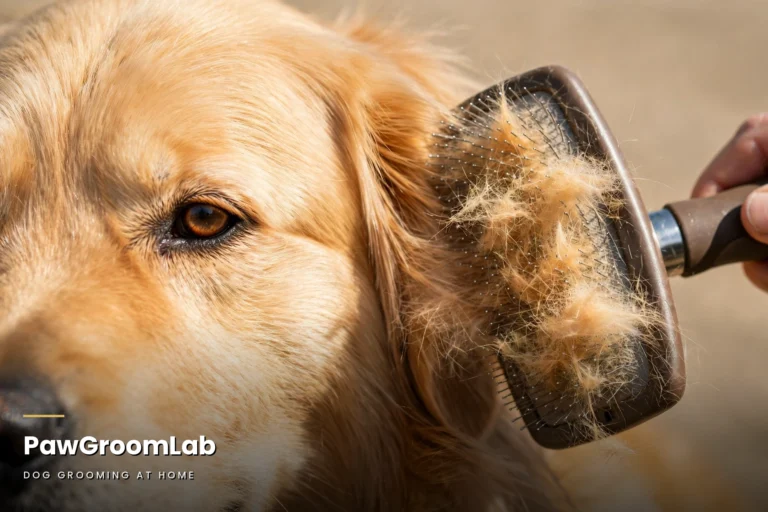
Double coats — thick undercoat plus topcoat — have one rule above all: never shave. Shaving a double coat damages its insulation and regrowth, and it does not make the dog cooler; it removes the coat that regulates temperature. Instead, rake the undercoat 2 to 3 times a week, daily during seasonal blow-outs, and bathe every 6 to 8 weeks. Curly coats are the opposite problem: hair that grows continuously and tangles into itself. Brush every other day at minimum, daily is better, with a slicker, and keep professional grooms every 4 to 6 weeks for trimming and shaping. If a curly coat goes unbrushed for a week, expect mats — that is not a failure of the coat, it is the coat doing what curly hair does.
Drying: Where the Routines Really Split
Drying is the most underestimated difference. A short coat towel-dries in minutes and air-dries fast. A long coat needs towel patting (never rubbing, which tangles), then brushing while drying so hairs separate instead of clumping, and a final check that ears, paws and toes are fully dry before the collar goes back on. A damp long coat left to air-dry in a cold room is a mat and skin-irritation risk. Budget drying time honestly: if you only have ten minutes, a long-coated dog is not a ten-minute groom, and that is fine — plan the session around it.
Mistakes by Coat
Short-coat mistakes: never brushing because “short hair looks after itself” (it sheds and the skin still needs checking), and bathing too often out of habit. Long-coat mistakes: skipping days until mats form, then pulling them out; bathing without conditioner; and leaving the coat damp. Double-coat mistakes: shaving, and using a deshedding blade aggressively instead of a rake. Curly-coat mistakes: brushing only the top layer while the undercoat mats underneath — always finish with the steel comb test. Every coat: using human shampoo, and skipping nail and ear checks because the coat looks fine.
Troubleshooting
My short-coated dog sheds everywhere: normal — weekly brushing with a rubber curry, more in shedding season, moves loose hair to the brush. It will not stop shedding, and no routine should promise that. My long-coated dog mats behind the ears constantly: that zone needs daily attention and the hair around the ear opening kept tidy enough for air. Work existing mats gently with fingers and comb, holding the base. My double-coated dog is blowing coat all over the house: daily raking during the blow-out, a bath only when due, and patience — the season passes. My curly dog’s coat felt fine but the groomer found mats underneath: brush in sections down to the skin and finish every session with the steel comb; if the comb snags, there is work left. My dog smells soon after a bath: check ears, paws and skin folds first — odour often comes from ears or damp coat, not from needing another bath.
Vet Safety Box — Read This Before You Work a Coat
Coat care is grooming, not treatment. See a vet or a professional groomer — do not pull, cut or bathe through it — if you find tight mats against the skin, red or sore skin under a mat, bald patches, sores, a bad smell from skin or ears, or pain when a mat is touched. Tight mats cut off air to the skin and can hide sores underneath; cutting them out at home with scissors near skin is how dogs get cut. If a coat mats constantly despite the routine above, or skin stays irritated, ask your vet why — recurring coat or skin trouble often has an underlying cause grooming alone cannot fix. And never shave a double-coated dog on home advice: if a coat is severely matted, a groomer or vet should handle it.
Frequently Asked Questions
How often should I brush a short-haired dog?
Once a week is enough for most short coats, with a rubber curry in shedding season.
How often should I brush a long-haired dog?
Daily — long hair tangles fast, and daily brushing is what prevents mats.
Can I shave my double-coated dog in summer?
No. Shaving damages the coat’s insulation and regrowth and does not cool the dog; rake the undercoat instead.
How often should long-haired dogs be bathed?
Every 3 to 6 weeks, with conditioner, and dried thoroughly.
Do short-haired dogs need professional grooming?
Rarely — usually only for nails or ears, unless the dog has skin concerns or heavy shedding.
Why does my curly dog mat so fast?
Curly hair tangles into itself; brush every other day at minimum and finish with a steel comb check down to the skin.
What to Do Next
Find your coat in the table, then follow its detailed guide: How to Bathe a Dog Without Stress; How to Trim Dog Nails Safely; How to Brush Out Shedding; How to Remove Matted Fur Without Hurting Your Dog; How to Clean Dog Ears; Puppy’s First Groom.
The following guides are also useful: How to Dry a Dog After a Bath; Dog Grooming Tools Beginners Actually Need; Complete At-Home Dog Grooming Schedule; Complete Dog Grooming at Home Guide.