
Complete Dog Grooming at Home Guide
TL;DR
Complete dog grooming at home guide, in short: groom in this order and everything gets easier. Brush first — always, because water tightens tangles into mats. Check the body for lumps, ticks and sore spots while you brush. Bathe only when due, with dog shampoo, and rinse until the water runs clear. Dry completely — towel blot, then low-cool air, brushing long coats as you go — and never put the collar back on a damp coat. Then nails a little at a time with styptic powder nearby, ears checked first and cleaned only if healthy, and teeth brushed several times a week with dog toothpaste. Do it on separate clocks, not one exhausting day: brushing weekly to daily by coat, bath every 4 to 8 weeks, nails every 2 to 4 weeks, ears checked weekly. Start with the guide for the job in front of you — every step below links to its full guide.
Table of Contents
Start Here: What Home Grooming Actually Is
Home grooming is not a salon replacement and not a single event. It is a set of small routines on different clocks that together keep a dog clean, comfortable and checked: coat care, bathing, drying, nails, ears, teeth and paws. Done regularly, it also becomes a health check — hands on the dog weekly means lumps, ticks, mats, sore skin and overgrown nails get found early, when they are small problems. Done rarely and all at once, it becomes stressful for the dog and miserable for the owner. The whole approach of this site follows one rule: short, positive sessions, the right tool for the coat, and a vet visit whenever something looks wrong instead of a home workaround.
The Full Routine, in Order
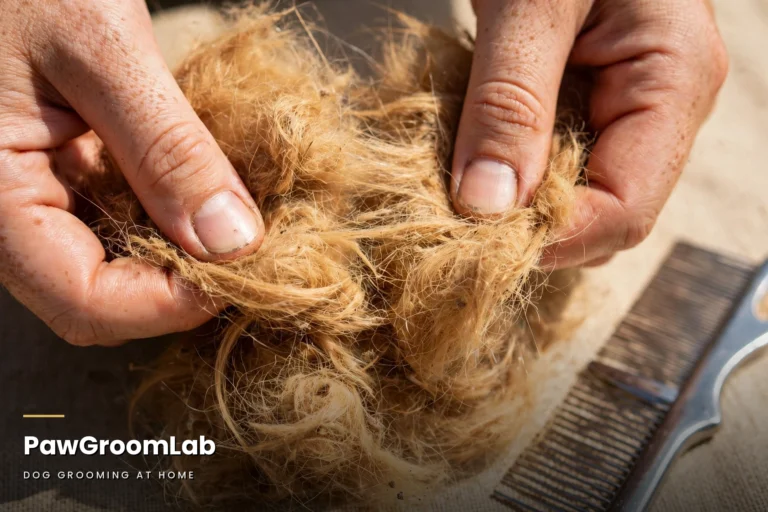
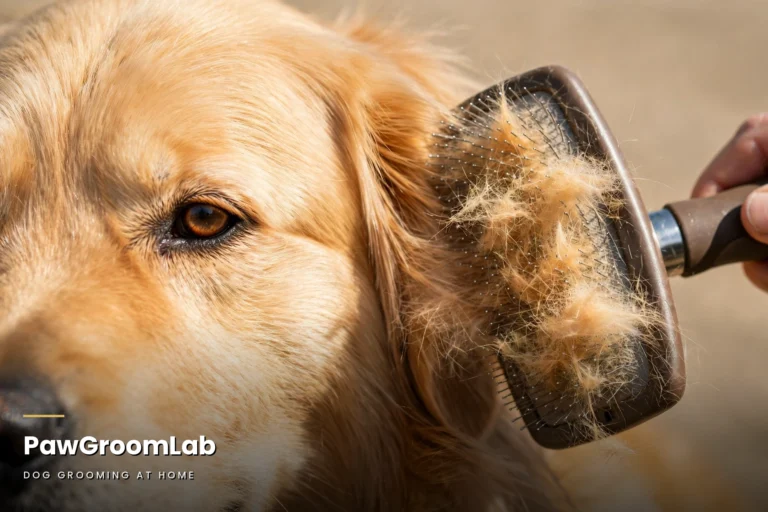
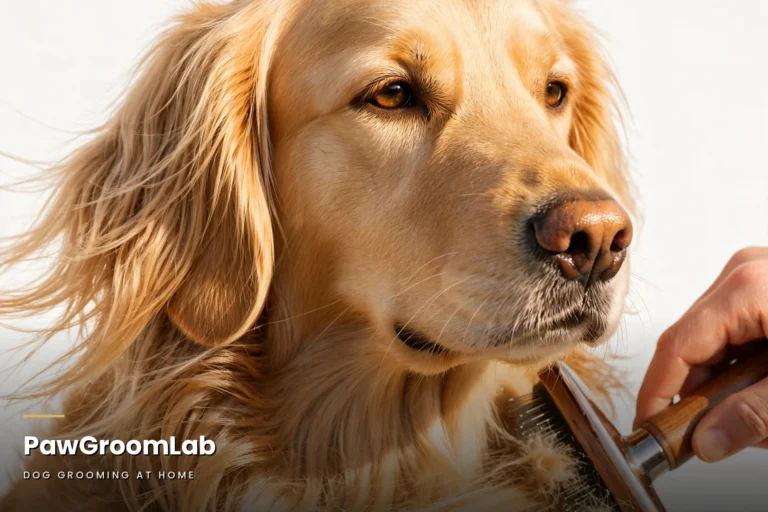
Step 1 — Brush and check. Brush before anything wet, working in sections with a coat-matched brush, then run a steel comb through to find hidden tangles. While you brush, run your hands over the body: lumps, ticks, cuts, sore spots, mat-prone zones behind ears, armpits and collar line. Full guides (live links): How to Brush Out Shedding — and for tangles that have already tightened, How to Remove Matted Fur Without Hurting Your Dog.
Step 2 — Bathe, only when due. Lukewarm water, dog-specific shampoo, lather over back, legs, armpits, belly and groin, rinse until the water runs clear, and keep water out of ears and eyes. Most dogs need a bath every 4 to 8 weeks, not weekly — over-bathing strips oils and dries skin. Full guide (live link): How to Bathe a Dog Without Stress.
Step 3 — Dry completely. Shake, towel blot (pat and squeeze, never rub), then low or cool airflow held 12 to 18 inches away and kept moving, brushing long coats section by section while drying. Ears, paws and toes must be fully dry, and the collar stays off until the coat is dry down to the skin. Full guide (live link): How to Dry a Dog After a Bath.
Step 4 — Nails, a little at a time. Clip or grind just the tip, avoid the quick, keep styptic powder beside you, and stop at a few nails per session if the dog is nervous — a few nails done calmly beats a full set done in a struggle. Full guide (live link): How to Trim Dog Nails Safely.
Step 5 — Ears, check first. Lift the flap, look and smell: redness, swelling, bad smell, dark or bloody discharge, or pain mean vet, not cleaning. Healthy ears get a vet-approved cleaner, a 20 to 30 second base massage, a shake, and a wipe of the outer ear only, never deeper than one knuckle, never with a cotton swab. Full guide (live link): How to Clean Dog Ears.
Step 6 — Teeth and paws. Brush teeth with enzymatic dog toothpaste — never human toothpaste — in circular motions along the outer surfaces and gum line, several times a week at minimum, daily if you can. Wipe paws, check pads for cuts and dryness, and trim overgrown fur around paws. Teeth and paws are the two jobs owners forget because they are not visible like coat — put them on the weekly rhythm and they stop slipping.
Coat Guide: Find Your Column
Short coats: brush 1 to 2 times a week, bath every 6 to 8 weeks, nails every 3 to 4 weeks — low maintenance, not no maintenance. Medium coats: brush 2 to 3 times a week, bath every 4 to 6 weeks, watch tangles around ears and legs. Long coats: brush daily, bath every 4 to 6 weeks with conditioner, professional trim every 4 to 6 weeks, drying takes much longer. Double coats: rake 2 to 3 times a week (daily in shedding season), bath every 6 to 8 weeks, never shave — shaving damages insulation and regrowth. Curly coats: brush every other day to daily, bath every 4 weeks, professional groom every 4 to 6 weeks — curly hair mats fastest when brushing slips. Full comparison (live link): Long-Haired vs Short-Haired Dog Grooming Routine.
Tools and Schedule: The Two Things That Hold It Together
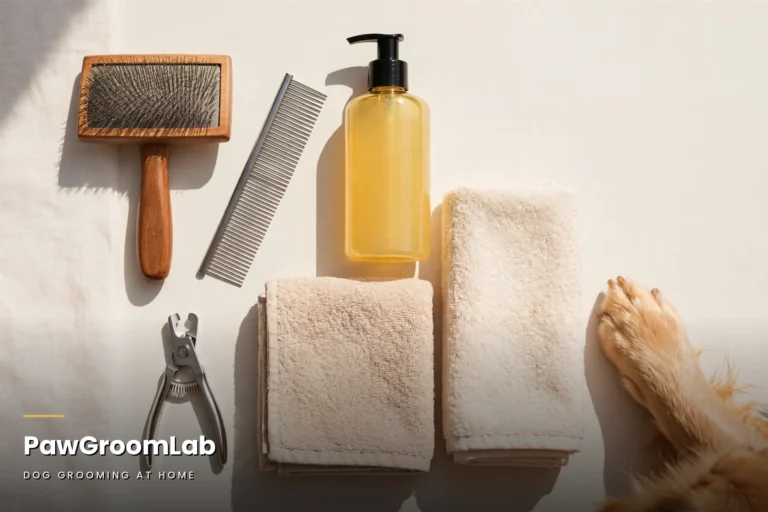
Tools first, in buy order: a coat-matched brush, a steel comb, a nail clipper or grinder plus styptic powder, dog shampoo, vet ear cleaner with cotton, dog toothbrush and paste, towels, treats and a non-slip mat. Coat extras second — undercoat rake, firm slicker, rubber curry — and clippers last, only when a real haircut is due. Full guide (live link): Dog Grooming Tools Beginners Need. Schedule second, as separate clocks: brushing weekly to daily, bath every 4 to 8 weeks, nails every 2 to 4 weeks, ears checked weekly, teeth several times a week to daily, full session every 4 to 8 weeks — adjusted for mud, swimming, pavement, allergies, puppies and seniors. Full guide (live link): Complete At-Home Dog Grooming Schedule. And for the very beginning, the gentlest possible start (live link): Puppy’s First Groom.
Safety Rules That Apply to Every Job
Never use human shampoo or human toothpaste on a dog. Never push cotton swabs deep into ears, and never use peroxide, alcohol, vinegar or oils in ears. Never cut a tight mat against skin with scissors — tight mats hide sores and skin cuts easily. Never shave a double coat. Never bathe a matted dog — water tightens mats. Never aim hot air at a dog, and never leave a damp dog in cold air. Never force a scared dog through a session — stop, treat, retry tomorrow. And never groom through pain, redness, swelling, smell, discharge or bald patches — those are vet visits, not grooming challenges.
Mistakes That Ruin Home Grooming
Bathing before brushing. Bathing weekly out of habit. Rubbing with a towel instead of blotting. Doing everything on one exhausting day, then nothing for two months. Skipping ears and teeth because they are invisible. Yanking mats instead of holding the base and working them out. Buying every tool at once instead of the core kit. Booking a full haircut for a young puppy. And expecting a first groom to go smoothly without the short daily handling sessions that build up to it.
Troubleshooting
My dog hates grooming: shorten every session, add higher-value treats, split tasks across days, and rebuild from touch-only work — a schedule the dog dreads will not survive.
The coat mats no matter what I do: frequency is too low for that coat, or brushing skips the steel-comb check — step up one level and comb to the skin.
The coat smells after a bath: check ears, paws and damp patches first — odour usually comes from moisture or ears, not from needing another bath.
Nails click two weeks after trimming: move to a two-week clock or trim a little weekly.
My dog will not stand still: standing for a minute is a trained skill — reward stillness in seconds, play first, and build up.
Vet Safety Box — Read This Before You Groom
Grooming at home supports veterinary care; it never replaces it. See a vet — do not groom through it — if you find redness, swelling, sores, bald patches, constant itching or scratching, a bad smell from skin or ears, dark or bloody discharge, pain when touched, tight mats against skin, nails that bleed repeatedly, or head tilt and balance problems. Dogs with allergies, skin disease or recurring ear trouble need veterinary schedules for bathing and products. If any problem keeps coming back despite correct grooming, ask your vet why — recurring trouble often has an underlying cause grooming alone cannot fix.
Frequently Asked Questions
Can I groom my dog fully at home?
Yes, for routine care — brushing, bathing, drying, nails, ears, teeth and paws — with professional help for full haircuts, tight mats and anything medical.
What order should I groom in?
Brush and check first, bath when due, dry completely, then nails, ears, teeth and paws.
How often should I do a full groom?
A full groom-everything session every 4 to 8 weeks, with each job on its own clock between sessions.
What tools do I need to start?
A coat-matched brush, steel comb, nail clipper or grinder plus styptic powder, dog shampoo, vet ear cleaner, dog toothbrush and paste, towels, treats and a non-slip mat.
When should I see a vet instead of grooming?
For redness, swelling, sores, smell, discharge, pain, tight mats, bald patches or anything that keeps recurring.
How do I start with a puppy?
Short positive handling from about 8 weeks, first home bath around 8 to 10 weeks, salon intro around 12 to 16 weeks after vaccinations, no full haircut until 6 to 8 months.
All the Guides, in One Place
Start with the job in front of you — every guide below is a full step-by-step routine. Link all ten live guides: How to Bathe a Dog Without Stress; How to Trim Dog Nails Safely; How to Brush Out Shedding; How to Remove Matted Fur Without Hurting Your Dog; How to Clean Dog Ears; Puppy’s First Groom; Long-Haired vs Short-Haired Dog Grooming Routine; How to Dry a Dog After a Bath; Dog Grooming Tools Beginners Need; Complete At-Home Dog Grooming Schedule.

2 Comments