How to Bathe a Dog Without Stress (Calm Routine That Works)
TL;DR — How to bathe a dog without stress, in short: brush first, then wash with lukewarm water and a dog-only shampoo, rinse until the water runs completely clear, and towel-dry before you even think about a dryer. Keep your voice low, your movements slow, and treats within reach. Most dogs do not need a bath more often than every 4 to 6 weeks, and a nervous dog does better with a short, calm bath than with a long, perfect one.
Table of Contents
Why Bath Time Turns Into a Wrestling Match
Most bath battles are not about water. They are about surprise. A dog that gets lifted into a slippery tub, sprayed with a loud showerhead, and scrubbed all at once has no idea what is happening next, so it panics. The fix is boring and it works: make every step predictable. Same spot, same order, same calm voice, and a treat at each stage. After two or three baths done this way, most dogs walk in with far less fuss, because they already know how it ends — dry, praised, and rewarded.
Before You Start: The Tools Checklist
Get everything ready before the dog gets wet. Leaving a wet dog alone in a tub while you hunt for shampoo is how accidents and escapes happen. You need:
- a brush or comb matched to your dog’s coat
- dog shampoo (never human shampoo) and conditioner if your dog has a long or curly coat
- two or three towels, plus one more than you think you need
- a non-slip mat or a towel on the tub floor
- a cup, jug, or handheld sprayer on its lowest setting
- cotton balls for the ear openings (placed gently at the opening, never pushed inside)
- treats in a waterproof pouch or a helper’s hand
- a dryer only if your dog already tolerates one — otherwise, towels are enough
Step 1: Brush Before a Single Drop of Water
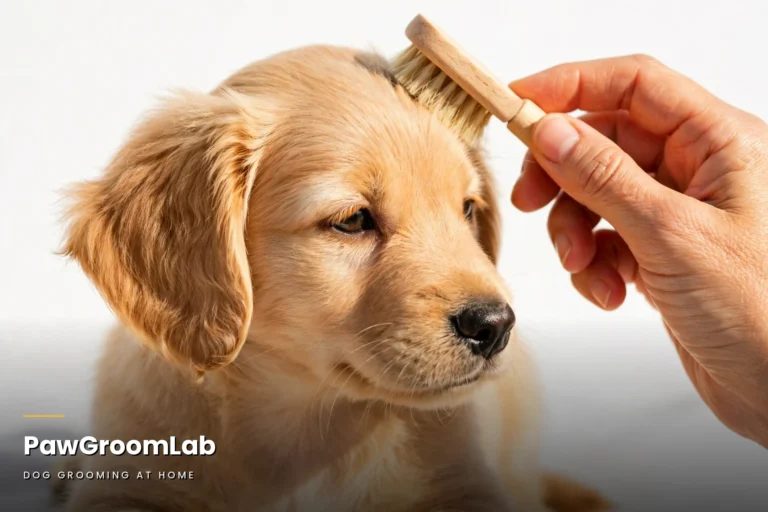
Brush the coat out fully while it is still dry. This is the step people skip, and it is the one that matters most. Water tightens mats and tangles, so a small knot you could have brushed out in ten seconds becomes a felted clump after the bath. Work through the mat-prone spots — behind the ears, under the collar line, the armpits, and the feathering on the legs — and deal with any tangle now, not later. If you find a mat you cannot work through with your fingers and a comb, stop and deal with the matted fur first before you bathe; soaking a tight mat only makes it worse.
Step 2: Set the Water and the Room
Lukewarm is the word — comfortable on the inside of your wrist, never hot, never cold. A draft-free room helps more than people expect; a wet dog in a cold bathroom shivers, and a shivering dog is a stressed dog. Put the non-slip mat down, lay your towels where you can reach them without letting go of the dog, and keep the noise down. If your showerhead is loud, use a cup or jug instead. Quiet water is one of the simplest calm-down tricks there is.
Step 3: Wet From the Paws Up
Start at the paws and work up the legs to the body, rather than pouring water over the head first. Dogs accept water on their feet far more readily than water on their face, and starting low lets them adjust. For a dense or double coat, part the fur with your fingers as you wet it so the water actually reaches the skin instead of sitting on the top layer. Keep water out of the eyes and ears — wash the face separately at the end with a damp cloth, not with the sprayer.
Step 4: Shampoo in Stages, Not All at Once
Use a shampoo made for dogs. Human shampoo is the wrong pH for dog skin and can leave it dry and itchy, which is the last thing you want after a bath that is supposed to help. Work in stages — paws, belly, back, sides, tail, then neck — and massage it in like you mean it, in slow circles. Talk while you work. A steady, low voice does more than any calming product on the shelf. If one area is very dirty, let the lather sit for a couple of minutes there before you rinse.
Step 5: Rinse Until the Water Runs Clear
This is where most baths fail. Shampoo left in the coat dries into an itchy residue, and then the dog scratches for days and the owner blames the shampoo. Rinse longer than you think you need to, until the water running off is completely clear with no bubbles at all. Check the hidden spots: under the paws, in the skin folds, under the tail, and behind the ears. When in doubt, rinse once more.
Step 6: Dry the Calm Way
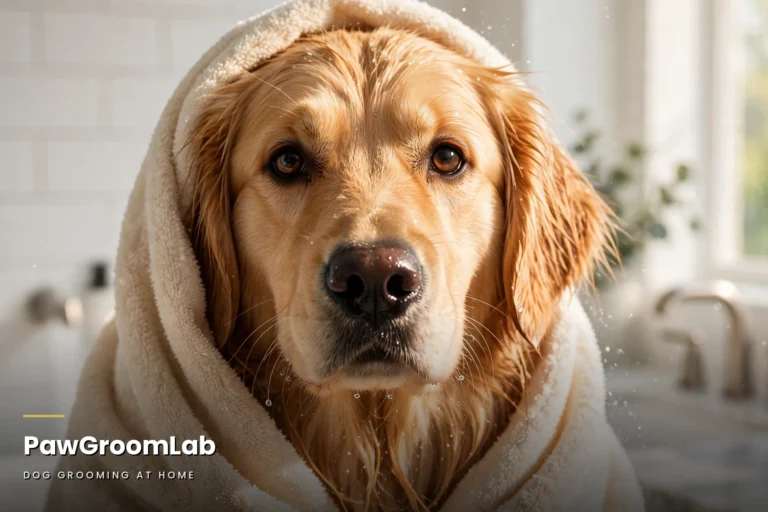
Towel-dry first, always. Pat — do not rub hard, especially on a long coat, because rubbing creates the very tangles you just brushed out. Let the dog shake, then wrap it in a dry towel for a few minutes while you tidy up. Only use a dryer if your dog already tolerates the sound, and then only on a low or cool setting, kept moving and at a distance, never aimed at one spot. If your dog hates the dryer, skip it entirely. A thoroughly towel-dried dog in a warm room is a perfectly good result.
Bathing by Coat Type
Short coats
The easy ones. A rubber curry brush before the bath and a quick wash after is usually enough. Short coats dry fast, so towel-drying alone often finishes the job.
Long coats
Brush in sections before the bath, use conditioner after the shampoo, and budget extra time for rinsing — long fur hides shampoo residue well. Dry in sections too, brushing gently as you go so the coat does not set into tangles.
Double coats
Never shave a double coat to make bath day easier; the undercoat is insulation, not excess. Wet the coat right down to the skin, rinse thoroughly, and expect drying to take the longest. A damp undercoat left to sit is how musty smells and skin irritation start, so do not finish until the undercoat is actually dry.
Curly coats
Curly fur mats fast when wet, so the pre-bath brush matters double here. Conditioner is not optional for most curly coats, and a wide-toothed comb after the bath keeps the curls from knotting as they dry.
Puppies
Wait until a puppy is at least 12 weeks old before its first real bath, and keep that first bath short and boring on purpose — warm room, gentle water, lots of praise, towel dry only, no dryer. The goal of a puppy’s first bath is not cleanliness. It is teaching the puppy that bath time is safe, so every bath after it is easier.
If Your Dog Is Scared of Baths
A frightened dog does not need a better shampoo. It needs smaller steps. For a few days before bath day, just bring the dog to the bathroom and give treats there. Then treats with the tap running nearby. Then wet paws only, treated and finished. Build up one stage at a time, and stop at the stage your dog can handle calmly — pushing past it undoes the progress. On bath day itself, keep the session short: a quick wash of the dirtiest areas, well done, beats a full bath that ends in panic. Two people help a lot here — one to wash, one to feed treats steadily. And if your dog is truly terrified every single time despite slow work, say so to your vet; there is no shame in asking for help with fear, and forcing a terrified dog is never the answer.
Mistakes That Make the Next Bath Harder
Bathing too often
Most healthy dogs need a bath every 4 to 6 weeks, not every week. Overbathing strips the natural oils and leaves dry, itchy skin.
Using human shampoo or dish soap as a regular wash
Both are wrong for dog skin.
Skipping the pre-bath brush
Then wondering why the coat is matted after.
Rinsing until it looks clean instead of until the water runs clear
Rinse until the water runs completely clear.
Aiming a hot dryer at one spot, or using a dryer on a dog that has never heard one before
Use a dryer only on a low or cool setting, kept moving, and only if your dog already tolerates the sound.
Chasing a perfect bath on a frightened dog instead of ending on a calm note
Always end while things are still going well, even if that means a shorter bath.
Troubleshooting
My dog shakes and tries to jump out mid-bath
Keep one hand on the dog at all times, keep the water low and quiet, and shorten the bath. A non-slip mat removes the scrambling that makes dogs panic, and a helper handing treats gives the dog something better to think about.
The coat still smells after the bath
Usually one of two things — shampoo residue left behind, or an undercoat that never fully dried. Rinse longer next time, and dry the undercoat properly. If the smell persists along with redness or flaking, that is a vet conversation, not a second bath.
My dog scratches a lot after bathing
Rinse residue is the first suspect, followed by a shampoo that does not suit your dog’s skin. Try a gentle, fragrance-light dog shampoo and a longer rinse. If scratching continues or the skin looks red or sore, see a vet before bathing again.
Water got in the ears
Dry the outer ear gently with a towel and watch for head shaking, scratching, or smell over the next day or two. Dogs with floppy ears or swimmers need ear checks more often, and any sign of pain, discharge, or strong smell means a vet visit, not a home clean.
Vet Safety Box
Bathing is grooming, not treatment. If you notice redness, sores, flaking, bald patches, a strong skin smell, or your dog scratching or biting at its skin a lot, do not try to fix it with more baths or a stronger shampoo — see a vet first. The same goes for ears: redness, discharge, pain, or a bad smell means the vet comes before any cleaning. A bath should never be used to wash away a problem that needs diagnosing.
Frequently Asked Questions
How often should I bathe my dog?
Most healthy dogs do well with a bath every 4 to 6 weeks. Muddy dogs, swimmers, and dogs with oily coats may need it more often, and dogs that rarely get dirty can go longer. Brushing between baths keeps the coat healthy without the downsides of overbathing.
Can I use human shampoo on my dog?
No. Human shampoo is formulated for human skin pH and can dry out and irritate dog skin. Use a shampoo made for dogs, and for sensitive skin choose a gentle, fragrance-light one.
Should I brush before or after the bath?
Before, always. Brushing dry removes tangles and loose fur and lets the shampoo reach the skin. Water tightens mats, so anything left unbrushed gets worse in the bath. A light brush after drying finishes the job.
What if my dog hates the dryer?
Skip it. Towel-dry thoroughly in a warm room and let the coat air-dry the rest of the way. A dryer is a convenience, not a requirement, and a calm towel-dried dog beats a panicked blow-dried one every time.
At what age can a puppy have its first bath?
At least 12 weeks old, kept short and gentle, towel-dried only. Before that, a damp cloth for spot cleaning is enough, and the real goal is building a calm association with water and handling.
Do I need to bathe my dog after every muddy walk?
No. For mud, let it dry and brush it out — dried mud brushes off a coat far more easily than wet mud washes out, and you save your dog an unnecessary bath. Save full baths for when the dog is actually dirty or smelly.
What to Do Next
Bath day does not end at the towel. Once your dog is dry, a quick brush, a nail check, and an ear check turn one grooming session into a full routine without much extra effort. Guides that pair naturally with this one (plain text names only, no links yet):
9 Comments