How to Dry a Dog After a Bath (Without Heat Damage)
TL;DR
How to dry a dog after a bath, in short: towel first, dryer second, heat never. Let your dog shake, then blot with towels — pat and squeeze, never rub — working head to tail, then back down to belly, legs and paws. Short coats often finish with towels alone in 10 to 20 minutes. Long and double coats need a low or cool dryer too: hold it 12 to 18 inches away, keep it moving, and brush while you dry so hairs separate instead of matting. The rule that matters most: airflow dries the coat, heat damages it — and the collar only goes back on when the coat is fully dry, including ears, paws and toes.
Table of Contents
Why Drying Is Part of Grooming, Not Cleanup
A bath is only half done when the water stops. A coat left damp stays cold and uncomfortable, moisture sits against the skin in dense coats, and damp hair tangles into mats as it dries — especially long and curly coats. Wet paws make smooth floors slippery, and a damp dog in a cold room or draughty garage can chill fast. Drying is also a second skin check: as you work through the coat section by section, you see redness, scrapes, bumps or sore spots you missed in the bath. Rush drying and you lose both benefits — a half-dry coat and an unchecked dog.
Step 1: Shake, Then Towel Blot (Never Rub)
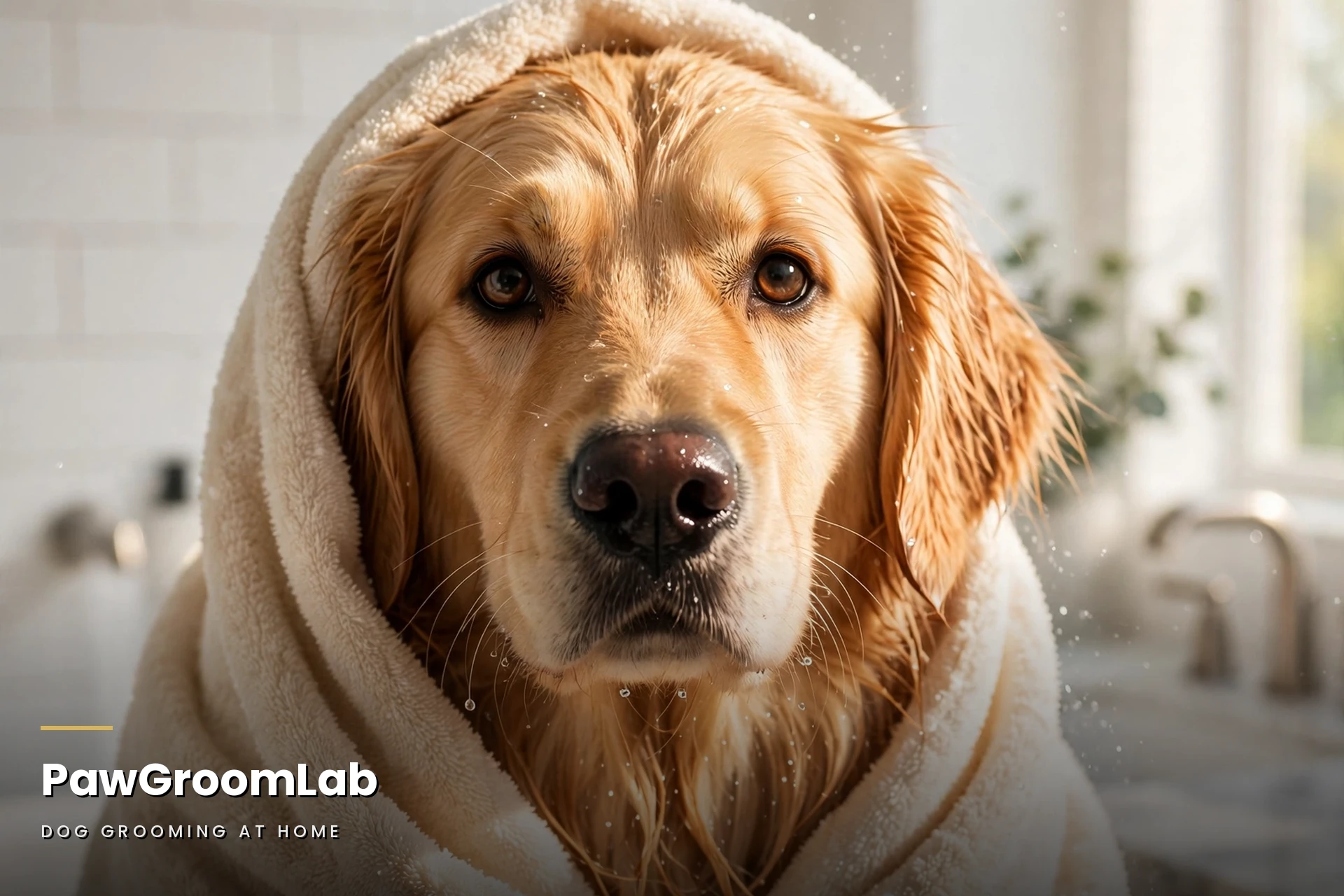
Let your dog shake first — step back and hold a towel as a shield, or keep them in the tub or a washable area for that first minute. Shaking removes a surprising amount of water on its own. Then towel with absorbent towels, microfiber if you have them: pat and squeeze the coat, working head to tail, then from the back down to belly, legs and paws. Rubbing is the mistake to avoid — friction tangles long hair and irritates short-coated skin. Large dogs need two or three towels; switch to a dry one when the first is soaked, because a wet towel stops absorbing. A wearable microfiber wrap can help while the dog settles, but it is not a complete drying method for thick coats.
Step 2: Dryer Rules — Airflow, Not Heat
If towels alone will not finish the job, use a pet dryer or a household dryer on its lowest, coolest setting — never high heat. Check the air on your own hand first: it should feel warm, not hot. Hold the dryer 12 to 18 inches from the coat and keep it moving in short strokes, like a massage; never park it on one spot, and never aim it at the face, ears or genitals. A high-velocity pet dryer, which moves air fast without much heat, cuts drying time roughly in half on thick coats compared with a household dryer. For long coats, brush while you dry — section by section — so hairs separate and dry instead of clumping into mats. Take breaks, offer treats, and watch for stress: panting, freezing or trying to escape means stop and go back to towels. Remove collars and harnesses before drying, since they trap water against the coat and skin.
Drying Times by Coat
Short or single coats: typically 10 to 20 minutes, often towels alone plus a quick brush. Long or fine coats: 20 to 45 minutes, blot first, then brush often while drying to prevent mats, with extra attention to the chest and behind the ears. Double or thick coats: 30 to 60 minutes or more, towel first, then staged airflow with undercoat brushing — these coats hold water deep against the skin, so “looks dry on top” does not mean dry. Curly coats fall in the long-coat range and need the same brush-while-drying approach. Whatever the coat, the finish line is the same: ears, paws and toes fully dry, no damp patches under the collar line or armpits, and the coat dry down to the skin, not just on the surface.
The Spots Owners Leave Damp
Ears: pat dry gently with a soft towel, and never blow air directly into the ear canal. Paws: wipe each paw and dry between the toes — trapped moisture between toes irritates skin and makes floors slippery. Tail base: wrap a towel around the base and squeeze, then let the rest air dry. Belly and armpits: these stay wet longest on long dogs and mat first. Collar line: damp hair under a collar mats and smells — the collar stays off until this area is fully dry. If any spot still feels cool and damp after your normal routine, it needs more time, not a hotter setting.
Cold Weather and Damp Risks
Never dry a dog in a cold garage or a draughty room, and avoid drying outdoors below about 65°F (18°C) — a wet dog chills fast, and chilling stresses the immune system. The drying area should feel comfortably warm, with non-slip footing so a wet dog does not slip when it shakes. Keep the dog within reach if it gets nervous, and never leave a damp dog unattended near a fan or heater. In cold weather, add extra towel time before any dryer work, and do not send the dog outside until the coat is fully dry — a damp coat in cold air is how a routine bath turns into a miserable, shivering dog.
Mistakes That Damage Coats (and Skin)
Rubbing with a towel instead of blotting. Using high heat to “finish faster” — heat dries skin, damages coat texture, and can burn. Holding the dryer still on one spot. Blowing air at the face or into ears. Skipping the between-toes and armpit check. Putting the collar back on a damp coat. Sending a damp dog outside in cold weather. And rushing: drying is slow work on thick coats, and every shortcut shows up later as a mat, a smell, or sore skin.
Troubleshooting
My dog hates the dryer: go back to towels and sound-from-a-distance practice with treats — the dryer chapter of our puppy guide covers the build-up. Never force a terrified dog under a dryer to save time. The topcoat looks dry but underneath is wet: that is normal on double coats — part the coat and feel down to the skin, and keep drying in sections until the undercoat is dry. My dog’s coat mats after every bath: you are probably rubbing with the towel or air-drying without brushing — blot, then brush section by section while drying. The coat smells even after drying: check ears, paws and skin folds, and check for damp patches under the collar — odour usually comes from moisture left somewhere, not from needing another bath. My dog shivers during drying: the room is too cold or the air is too cool — move to a warm room, towel more, and use only gentle warm air.
Vet Safety Box — Read This Before You Dry
Drying is grooming, not treatment. See a vet — do not keep drying or bathing through it — if you find redness, sores, a bad smell, constant itching, hot spots, or skin that stays irritated after baths. Moisture trapped against skin can feed hot spots and infections, especially in dense coats and skin folds, and those need veterinary diagnosis, not a hotter dryer or another wash. If a coat stays damp for hours despite proper drying, or the dog repeatedly gets skin trouble after baths, ask your vet why — recurring skin trouble often has an underlying cause grooming alone cannot fix.
Frequently Asked Questions
Can I use a human hair dryer on my dog?
Only on its lowest, coolest setting, held 12 to 18 inches away and kept moving — high heat damages coat and skin, and a pet dryer that moves air without much heat is the safer tool.
Should I towel dry or air dry?
Both: towel blot first, then finish with gentle airflow or a warm draft-free room — air drying alone leaves thick coats damp underneath for hours.
How long does drying take?
Short coats 10 to 20 minutes, long coats 20 to 45, double coats 30 to 60 or more.
Why does my dog’s coat mat after baths?
Usually towel rubbing or drying without brushing — blot, then brush section by section while drying.
When can the collar go back on?
Only when the coat is fully dry down to the skin, including the collar line, ears, paws and toes.
Can I dry my dog outside?
Only in mild, warm weather — never in cold air or draughts, and never until the coat is fully dry.
What to Do Next
Drying finishes the bath, and the rest of the routine builds from there. See How to Bathe a Dog Without Stress; How to Trim Dog Nails Safely; How to Brush Out Shedding; How to Remove Matted Fur Without Hurting Your Dog; How to Clean Dog Ears; Puppy’s First Groom; Long-Haired vs Short-Haired Dog Grooming Routine.
Also: Dog Grooming Tools Beginners Actually Need; Complete At-Home Dog Grooming Schedule; Complete Dog Grooming at Home Guide.